.png)
Why Self-Regulation Feels So Hard When You’re Neurodivergent

Do you ever feel as though your emotions escalate more quickly than other people's, or take much longer to settle? Perhaps you know you need to calm down, but your body doesn't seem to get the message. If you're neurodivergent, this experience may feel all too familiar.
Many people with ADHD, autism, AuDHD or high sensitivity struggle with self-regulation. This isn't a question of willpower or resilience. Rather, it reflects the way your nervous system processes sensory information, emotions and perceived threat.
Understanding how your nervous system works can be incredibly empowering. Instead of asking, "What's wrong with me?", you can begin asking, "What does my nervous system need right now?" In this article, we'll explore why self-regulation can feel so difficult, what Polyvagal Theory can teach us about safety and overwhelm, and practical ways to support your nervous system with greater compassion.
What Is Self-Regulation and Why It’s So Important
Self-regulation is your ability to manage emotional and physiological responses — to move from stress or activation back into a sense of safety and calm. It helps you stay grounded and connected, even when life feels unpredictable.
For neurodivergent individuals, however, self-regulation can be more complex. The brain and body process information differently, which means you might feel emotions more intensely, react faster to sensory input, and take longer to return to a balanced state.
This is particularly true for people with ADHD and anxiety, where the combination of heightened emotional responses and a sensitive stress system makes nervous system regulation more difficult.
Self-Regulation vs. Emotional Regulation
These two terms are often used interchangeably, but they are slightly different.
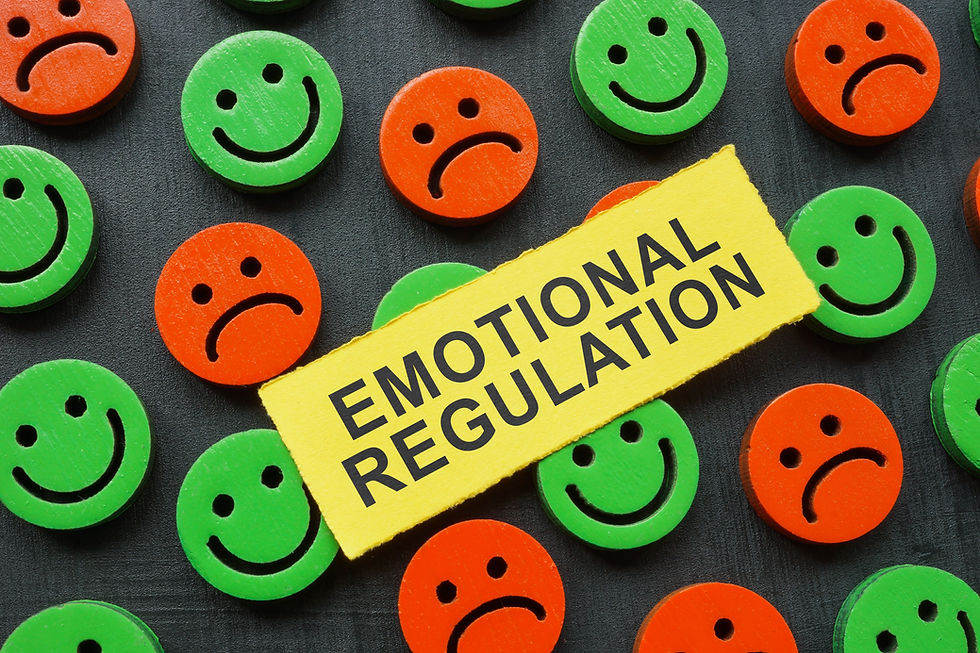
Emotional regulation refers specifically to our ability to recognise, understand and respond to emotions in helpful ways.
Self-regulation is broader. It includes emotional regulation, but also the ability to regulate our nervous system, attention, behaviour and physiological responses to stress.
For example, if you feel overwhelmed after a difficult conversation, emotional regulation might involve recognising that you're feeling hurt or anxious. Self-regulation involves helping your whole nervous system return to a state of balance through rest, movement, connection or other supportive strategies.
For many neurodivergent people, challenges with emotional regulation and nervous system regulation go hand in hand, which is why self-regulation can sometimes feel so difficult.
The Nervous System and the Polyvagal Theory
The autonomic nervous system governs all the functions that happen automatically — like your heartbeat, breathing, and digestion. It’s constantly scanning your environment for signs of safety or danger, a process known as neuroception (a term coined by Stephen Porges, who developed the Polyvagal Theory).
According to this model, the nervous system moves between three main states:
Ventral Vagal (Safety and Connection) – When your body feels safe, the ventral vagal branch of the vagus nerve supports calm, engagement, and social connection.
Sympathetic (Fight or Flight) – When danger is sensed, the body shifts into high alert, increasing adrenaline and heart rate — which can feel like anxiety or agitation.
Dorsal Vagal (Shutdown or Freeze) – When stress becomes overwhelming, the body may shut down to protect itself, leading to numbness, exhaustion, or dissociation.
Healthy self-regulation depends on the ability to move flexibly between these states — activating when needed and returning to calm when the threat has passed. For many neurodivergent people, however, this flexibility can be harder to access.
A Gestalt Perspective
From a Gestalt perspective, developing greater self-regulation begins with awareness of sensations rather than trying to control our emotions. Before we can respond differently, we first need to notice what is happening in our bodies. This might mean becoming aware of a racing heart, shallow breathing, tightness in the chest or shoulders, or a heaviness in the stomach before we are even able to recognise an emotion. As awareness of these sensations grows, emotions often become clearer, creating the possibility for greater choice and self-regulation rather than automatic reactions.
Why It’s Harder for Neurodivergent People to Self-Regulate
1. Heightened Sensory Processing
Autistic and ADHD brains often experience sensory input more intensely. Bright lights, noise, or even social environments can overload the nervous system, activating the sympathetic state — a response well described in Polyvagal Theory and autism research. Once triggered, it takes longer for the body to calm — one of the hallmarks of emotional dysregulation in neurodivergent adults.
2. Differences in Interoception
Interoception is the awareness of internal sensations — noticing your heartbeat, tension, or hunger. For some neurodivergent individuals, these signals are either muted or overwhelming, making it hard to detect early signs of stress before the system tips into overload.
3. Chronic Social Stress and Masking
Many neurodivergent adults expend enormous energy trying to “mask” — hiding traits or mimicking neurotypical behaviours to fit in. This constant adaptation keeps the nervous system in sympathetic activation, leading to long-term stress and burnout.
4. Executive Function Challenges
For those with ADHD, difficulties with planning, sequencing, and impulse control can make it harder to access self-regulation tools when overwhelmed. You may know what would help (breathing, pausing, grounding), but your brain and body are out of sync in the moment.
How ADHD and Anxiety Feed Each Other
Many neurodivergent adults live with both ADHD and anxiety, and these two conditions often reinforce each other. ADHD traits like forgetfulness or impulsivity can trigger anxiety about performance or rejection. Meanwhile, chronic anxiety keeps the nervous system in overdrive, worsening ADHD symptoms such as restlessness or poor focus.
This creates a cycle where emotional dysregulation becomes the norm — the nervous system is constantly oscillating between activation (fight/flight) and collapse (shutdown).
Supporting Your Nervous System: Practical Strategies
1. Co-Regulation Comes First
Before you can self-regulate, your body needs experiences of co-regulation, feeling safe in connection with others. Calm presence, gentle voices or compassionate relationships can support the ventral vagal system, helping your body settle.
Many of us have been taught that we should be able to calm ourselves down independently. In reality, our capacity to self-regulate develops through repeated experiences of co-regulation with others. Feeling understood, accepted and emotionally safe with another person helps our nervous system recognise safety. Over time, these experiences become internalised, making it easier to regulate ourselves even when we are alone.
2. Use the Body to Calm the Mind
You cannot calm the mind with the mind. Since nervous system regulation begins in the body, engaging it directly can help shift emotional states more effectively than trying to think your way out of them.
When your system feels flooded, grounding through movement or touch can activate both hemispheres of the brain and send signals of safety to the body.. This process — known as bilateral stimulation — helps the brain integrate emotion and sensory experience, gently guiding you back toward balance.
One simple and soothing way to do this is the Butterfly Hug, a technique developed within trauma therapy and now widely used for self-soothing and emotional regulation.
🦋 The Butterfly Hug
Cross your arms over your chest so each hand rests just below your collarbone, forming a butterfly shape with your thumbs touching.
Slowly and alternately tap your hands on your chest — left, right, left, right — in a calm, rhythmic motion.
Breathe slowly and deeply as you tap, keeping your attention on the gentle rhythm.
You might silently repeat phrases such as “I am safe right now” or “This feeling will pass.”
This alternating stimulation helps both sides of the brain communicate, supporting emotional processing while activating the calming ventral vagal branch of the vagus nerve. Research shows that bilateral stimulation can calm the amygdala, helping people move from a state of sympathetic arousal (anxiety, restlessness) toward grounded calm.
Other simple body-based soothing practices include:
Slow breathing (especially with longer exhales)
Gentle movement or walking to release tension
Rocking or rhythmic motion to soothe the vestibular system
Soft sensory input — low lighting, calming music, or comforting textures
These small, body-based actions remind your nervous system that you are safe — helping the mind settle as the body comes into balance.
3. Track Your State
Begin noticing your physiological states throughout the day — your breathing, muscle tension, and posture. Are you in fight, flight, or freeze? Awareness helps you intervene earlier, before your body becomes flooded. You may also notice that once a feeling takes hold, it can be difficult to shift. This is sometimes described as emotional inertia.
4. Reduce Internal Pressure
Perfectionism and self-criticism fuel anxiety and sympathetic activation. Practising self-compassion helps calm the system and supports more stable self-regulation.
5. Explore Therapeutic Support
In my work as a Gestalt psychotherapist, I often support neurodivergent clients to become more aware of the relationship between their bodily sensations, emotions and nervous system states. By gently bringing attention to these present-moment experiences, it becomes possible to develop greater self-regulation and emotional balance over time.
Final Thoughts
If you find self-regulation difficult, please know you’re not alone and you’re not failing. Your nervous system may simply be more finely tuned and more responsive to the world around you.
Understanding Polyvagal Theory and how the vagus nerve influences emotional safety can help you work with your body rather than against it. For neurodivergent people, this awareness can begin to replace frustration and self-criticism with curiosity, compassion and greater understanding.
Self-regulation is not about forcing yourself to calm down. It is about understanding what your nervous system needs and responding with greater awareness, compassion and choice.
References
Porges, S. W. (2011). The Polyvagal Theory: Neurophysiological Foundations of Emotions, Attachment, Communication, and Self-Regulation.
Dana, D. (2018). The Polyvagal Theory in Therapy: Engaging the Rhythm of Regulation.
Siegel, D. J. (2012). The Developing Mind: How Relationships and the Brain Interact to Shape Who We Are.
Critchley, H. D., & Garfinkel, S. N. (2017). Interoception and emotion. Current Opinion in Psychology, 17, 7–14.
Neff, K. (2011). Self-Compassion: The Proven Power of Being Kind to Yourself.
Further Reading
More reading about ADHD, AuDHD and Autism
The content on this page is provided for general information only. It is not intended to, and does not mount to advice which you should rely on. If you think you are experiencing any medical condition you should seek immediate medical attention from a doctor or other professional healthcare provider.